01
Myopia
Distant objects appear blurred while near objects may be clearer.
Our care team will contact you shortly.
Refractive errors such as myopia, hyperopia and astigmatism can make spectacles or contact lenses a regular part of everyday life.
Refractive surgery uses laser or lens-based techniques to reduce dependence on spectacles or contact lenses by correcting the way light is focused by the eye.
At Susrut Eye Foundation & Research Centre, different vision-correction options—including LASIK, PRK, Phakic IOL/ICL and SILK—may be considered depending on your eye health, corneal measurements, refractive error, age, lifestyle and visual requirements.

Refractive Surgery / Cornea
This page provides general information about refractive surgery. Whether a procedure is appropriate for you can only be determined after a comprehensive eye and corneal evaluation by a qualified ophthalmologist.
Refractive surgery refers to procedures designed to correct refractive errors and reduce dependence on spectacles or contact lenses.
A refractive error occurs when the eye does not focus light precisely on the retina.
The appropriate procedure depends on the patient's individual eye characteristics, refractive error and visual requirements.
Distant objects appear blurred while near objects may be clearer.
Near objects may appear blurred, although the effect can vary depending on age and degree of hyperopia.
Irregular curvature of the cornea or other optical structures can cause blurred or distorted vision.
Age-related changes in the eye's ability to focus on nearby objects typically become noticeable after the age of 40.
Different vision-correction procedures are available for different eye conditions and patient requirements. Your suitability can only be determined after a comprehensive refractive evaluation.
Suitable for selected patients with healthy corneas and appropriate refractive errors.
An alternative laser procedure in which the corneal epithelium is removed before the excimer laser reshapes the cornea.
A small lenticule is created within the cornea using a femtosecond laser and removed through a small incision.
An artificial lens is placed inside the eye while the natural lens remains in place. It can be considered for selected patients with high refractive errors who may not be suitable for corneal laser procedures.
Suitability depends on factors including your eye health, corneal measurements, refractive error, age, lifestyle and visual requirements. Your ophthalmologist will recommend the most appropriate option after a detailed evaluation.
LASIK (Laser-Assisted In Situ Keratomileusis) is a laser vision-correction procedure that reshapes the cornea so that incoming light can be focused more accurately on the retina.
According to Susrut's current page, LASIK involves creating a thin corneal flap, reshaping the underlying corneal tissue using an excimer laser and repositioning the flap without stitches.
The amount of corneal reshaping is determined according to the patient's refractive correction following a detailed pre-operative evaluation.
A thin flap is created in the cornea.
An excimer laser reshapes the underlying corneal tissue according to the patient's refractive correction.
The flap is repositioned and allowed to heal naturally.
LASIK can be used for selected patients with:
Suitability matters. Whether LASIK is appropriate depends on the patient's eye health and detailed pre-operative evaluation.
A patient may be considered for LASIK after a detailed assessment of their eye health, corneal measurements and visual requirements.
Are an appropriate age for the procedure.
Have a stable spectacle prescription.
Have healthy corneas suitable for laser vision correction.
Have corneal thickness appropriate for the planned procedure.
Do not have certain active or significant eye diseases.
Have realistic expectations about the procedure and its outcome.
Being over 18 does not automatically make someone eligible for LASIK. A detailed corneal and eye-health assessment is essential.
Photorefractive Keratectomy (PRK) is a laser vision-correction procedure that does not create a corneal flap.
Instead, the surface epithelium is removed and an excimer laser reshapes the cornea.
Susrut's existing refractive page describes PRK as an alternative for selected patients, including some people with thinner corneas or certain corneal conditions. It also notes that discomfort and visual recovery can be greater than with LASIK.
PRK reshapes the cornea without creating the flap used in LASIK.
The final decision should be made by the refractive surgeon after a comprehensive evaluation of the patient's eyes.
A flapless refractive procedure designed to reshape the cornea through the creation and removal of a small corneal lenticule.
SILK (Smooth Incision Lenticule Keratomileusis) is a flapless refractive procedure that uses a femtosecond laser to create a small lenticule within the cornea.
The lenticule is removed through a small incision, altering the corneal shape to correct the refractive error.
The femtosecond laser is used as part of the procedure.
A small lenticule is created within the cornea.
Access to the lenticule is created through a small incision.
The created lenticule is removed through the small incision.
Removing the lenticule alters the corneal shape to correct the refractive error.
Depending on patient suitability, the procedure may offer:
SILK is performed without creating a conventional corneal flap.
The lenticule is accessed and removed through a small incision.
The procedure may reduce dependence on spectacles or contact lenses in suitable patients.
Suitability is individual. Whether SILK is appropriate depends on your eye health, corneal characteristics, refractive error and detailed pre-operative assessment.
An alternative vision-correction approach for selected patients who may not be suitable candidates for corneal laser procedures.
A Phakic Intraocular Lens (Phakic IOL) is an artificial lens implanted inside the eye while the patient's natural lens remains in place.
It can be considered for selected patients with high refractive errors who may not be suitable candidates for corneal laser procedures.
Phakic IOL may be considered for selected patients following a comprehensive eye evaluation.
Patients with high levels of myopia may be considered for lens-based correction.
Patients with corneal thickness or shape unsuitable for laser correction may be considered.
Selected patients who want to reduce their dependence on spectacles may be considered.
Phakic IOL surgery is an intraocular procedure and therefore has a different risk profile from corneal laser procedures. A detailed evaluation is essential before deciding whether it is appropriate.
Your refractive surgeon will assess your refractive error, corneal characteristics, eye health and visual requirements before recommending an appropriate vision-correction option.
The best procedure is not necessarily the newest procedure. Your ophthalmologist will consider your individual eye characteristics, visual needs and expectations before recommending a treatment option.
A comprehensive assessment of your eyes and visual needs.
Detailed assessment of corneal structure and measurements.
Your refractive power and prescription are assessed.
Other relevant eye conditions and retinal health are considered.
The most appropriate option is selected based on the complete clinical picture.
The recommended procedure, benefits, limitations and risks are discussed before treatment.
LASIK, PRK, SILK and Phakic IOL / ICL are different approaches. The most appropriate option should be selected only after a detailed individual assessment.
Your eyes need more than a spectacle-power test.
Before refractive surgery, your surgeon needs to establish whether your eyes are suitable for the procedure.
Susrut's current page specifically mentions Orbscan, Pentacam and eye scans as part of its pre-surgical evaluation.
Assessment of your refractive error and spectacle prescription.
Assessment of corneal shape and structure.
Measurement of corneal thickness as part of suitability assessment.
Evaluation of tear-film status and dry-eye concerns.
Assessment of intraocular pressure where appropriate.
Detailed examination of the front structures of the eye.
Assessment of retinal health before proceeding with treatment.
Review of whether the refractive prescription has remained stable.
A refractive surgery consultation is an assessment of which procedure, if any, is appropriate for your eyes.
The exact procedure depends on the treatment selected. Each vision-correction procedure uses a different approach to correct the refractive error.
A thin corneal flap is created.
An excimer laser reshapes the cornea.
The flap is repositioned to heal naturally.
The surface epithelial layer is removed.
An excimer laser reshapes the cornea.
The corneal surface heals after treatment.
A femtosecond laser creates a lenticule.
A small incision provides access to it.
The lenticule is removed to reshape the cornea.
A customised lens is inserted inside the eye while the natural lens remains in place.
The procedure performed depends on the treatment selected after your eye examination, measurements and suitability assessment.
Recovery depends on the procedure and the individual patient. Your surgeon will guide you through each stage of the healing process.
Many patients experience relatively rapid visual recovery, but the exact timeline varies from person to person.
Visual recovery is generally slower than LASIK because the corneal surface needs time to heal.
Visual recovery varies according to the patient and the individual procedure.
Recovery depends on the intraocular procedure and the patient's individual healing process.
Your surgeon will provide specific instructions based on the procedure performed and your individual recovery.
Many patients experience rapid improvement in vision after some laser procedures, but recovery varies according to the procedure and the individual patient.
Refractive surgery uses established surgical techniques, but no eye procedure is completely risk-free. Possible risks vary by procedure and patient.
Refractive surgery is designed to reduce dependence on spectacles or contact lenses, but spectacle independence cannot be guaranteed for every patient.
As people age, the natural lens of the eye gradually loses its ability to focus on near objects. Therefore, someone who undergoes distance vision correction may still require reading glasses later in life.
Patients over 40 need a more detailed discussion because presbyopia becomes increasingly relevant.
Depending on your eyes and visual requirements, your surgeon may discuss different approaches to managing both distance and near vision.
Patients with very high refractive errors may not always be suitable for corneal laser procedures. In selected cases, Phakic IOL / ICL may be considered.
A lens-based vision-correction option that may be considered when corneal laser procedures are not suitable.
Vision correction begins with understanding your eyes, your visual needs and which treatment is appropriate for you.
Susrut's current refractive service includes LASIK, Phakic IOL and SILK, with PRK also described as an available refractive procedure.
The current service page highlights corneal imaging including Orbscan and Pentacam as part of pre-operative assessment.
The focus is on selecting an appropriate procedure based on the patient's eyes rather than promoting one procedure for everyone.
Susrut's doctor listings include ophthalmologists with refractive and corneal training across its network.
The right refractive procedure depends on your individual eye characteristics, visual requirements and clinical evaluation.
Consult our ophthalmologists with expertise in refractive surgery, corneal evaluation and personalised vision-correction treatment planning.
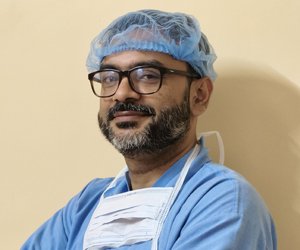
Cataract & Cornea, Lasik & Refractive
Reg. No.: 64686 (WBMC)
Berhampore, Saltlake
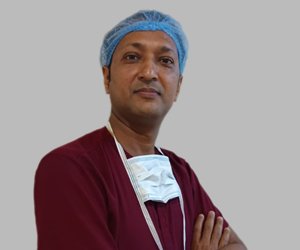
Cataract & Cornea, Retina & Vitreous, Lasik & Refractive
Reg. No.: 68668 (WBMC)
Saltlake
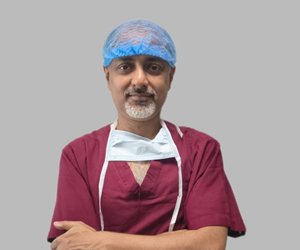
Cataract & Cornea, Retina & Vitreous, Lasik & Refractive
Reg. No.: 55127 (WBMC)
Saltlake
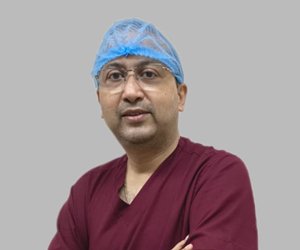
Cataract & Cornea, Lasik & Refractive
Reg. No.: 55120 (WBMC)
Saltlake

Cataract & Cornea, Lasik & Refractive
Reg. No.: 77520 (WBMC)
Saltlake
Glaucoma Care, Lasik & Refractive, Cataract & Cornea, Oculoplasty
Reg. No.: 71709 (WBMC)
Saltlake
Refractive surgery includes procedures that correct refractive errors and can reduce dependence on spectacles or contact lenses.
LASIK is a laser vision-correction procedure that reshapes the cornea to correct selected refractive errors.
No. Suitability depends on factors including age, prescription stability, corneal thickness and shape, eye health and other individual factors.
LASIK creates a corneal flap before reshaping the underlying corneal tissue. PRK does not create a flap; instead, the surface epithelium is removed before laser treatment. PRK generally has a longer visual recovery period.
SILK is a flapless refractive procedure in which a femtosecond laser creates a corneal lenticule that is removed through a small incision.
An Implantable Collamer Lens (ICL) is a phakic intraocular lens placed inside the eye while the natural lens remains in place.
Phakic IOLs can be considered for selected patients with high refractive errors, particularly when corneal laser procedures may not be appropriate.
The procedure itself is relatively short, but the complete visit includes preparation, evaluation and post-operative instructions. The exact time varies.
Significant dry-eye disease may affect suitability for refractive surgery. Your surgeon should evaluate the condition before recommending a procedure.
Residual or recurrent refractive error can occur in some patients. The likelihood varies according to the original prescription, age, corneal characteristics and individual healing response.
Possibly. Presbyopia develops with age and can affect near vision even after successful distance refractive correction.
Refractive surgery can reduce dependence on spectacles or contact lenses — but the right procedure begins with the right evaluation.
Find out whether you are a candidate for refractive surgery at Susrut.
Call Susrut